
About AVA
About Us
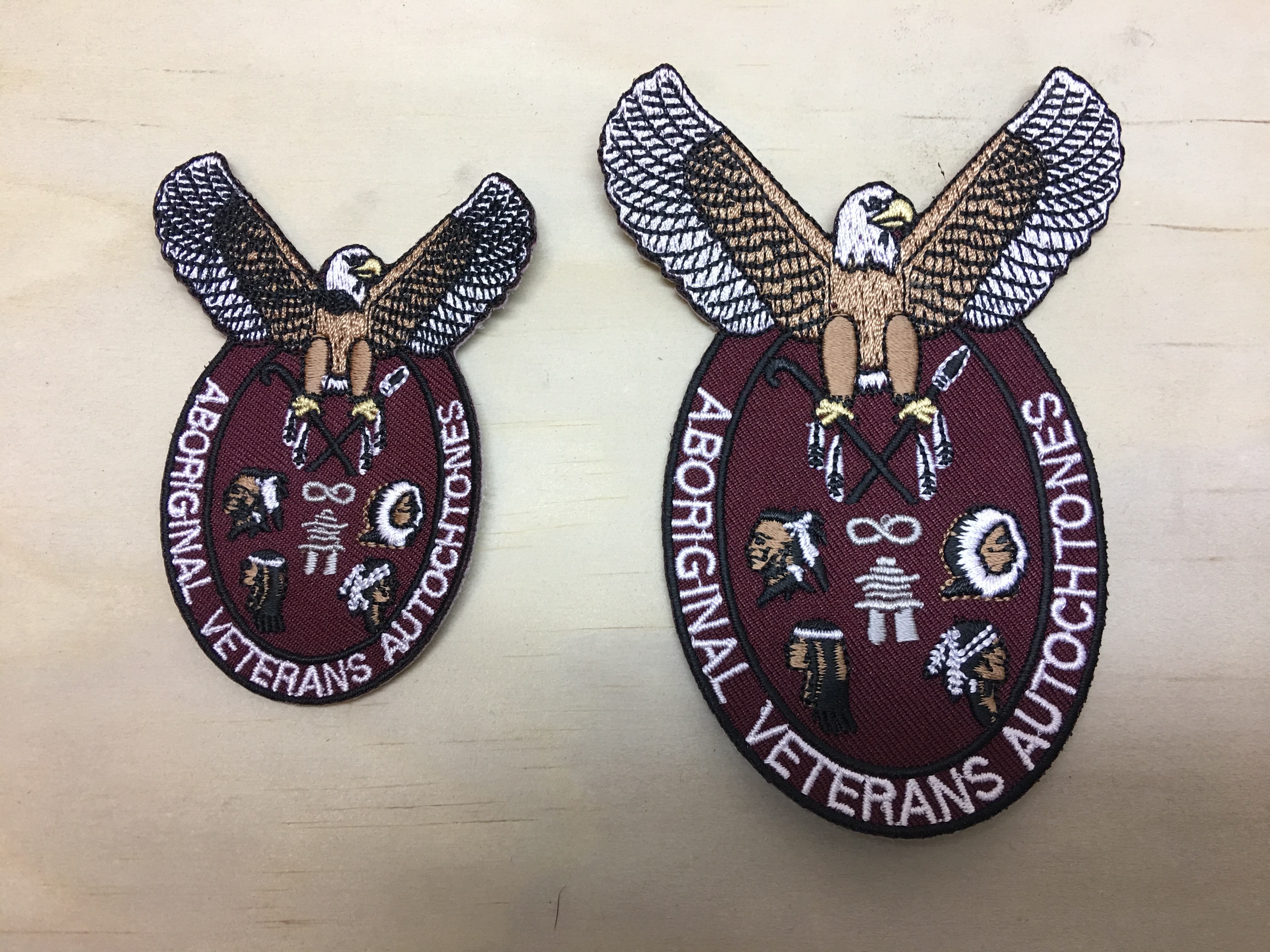
The Aboriginal Veterans Autochtones (AVA) is a nationally incorporated organization that represents the interests of Canadian Aboriginal Veterans and serving members who are of Aboriginal descent. This fills the void left by the dissolution of the National Aboriginal Veterans Association.
AVA works with its membership to re-establish and retain the dignity that has been lost from our traditional teachings and move forward as strong voices for the new generation of Veterans.
Contact Us
Our Three Pillars

Advocacy
To advise and provide support for and to all Aboriginal Veterans and their families regarding all issues pertaining to Veteran's needs and rights. Advocate and provide support to and on behalf of Aboriginal Serving Members.

Community Service
To promote, engage in and provide support to the community by encouraging contributions to our society and to future generations — providing the most positive influence to our Aboriginal communities and youth.

Remembrance
To honour and perpetuate the memories and outstanding deeds of our fallen comrades who gave their lives to preserve the freedom for all.
25+
Years of Advocacy
Representing Aboriginal Veterans since 1981
3
VAC Advisory Boards
Giving Aboriginal Veterans a direct voice
10
Provinces Represented
From coast to coast across Canada
Executive
To contact the Executive or Directors please use their email address below.
Secretary
TBA
To be announcedProvincial Directors
John Jewitt
ontario.avavets@gmail.comWallace Bona
wjbona@me.comAlex Maurice
ranger9@sasktel.netDevon Beaudry
kooldaddy2@hotmail.comDebbie Eisan
eisandeb@gmail.comTBA
To be announcedTBA
To be announcedMore to Discover


History & Heritage
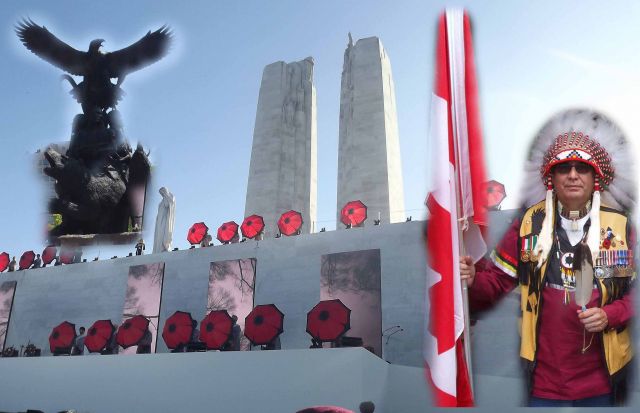
Aboriginal Peoples have fought and served alongside first with the British and then Canadians during times of war, military conflict and peace. Aboriginal Veterans have also volunteered and served with Canada's Allies. Through their courage and sacrifice, these men and women have helped to ensure that we live in freedom and peace, while also fostering freedom and peace around the world.
"Through their courage and sacrifice, these men and women helped ensure freedom and peace — a tradition that continues today."
Unfortunately, for some Aboriginal Veterans several discriminatory injustices were suffered during these wars and conflicts including when they returned home. Aboriginal Veterans struggled for their benefits throughout the years and felt a national organization with a definite set of goals and aims would enable them to present a unified voice.
In 1981, a group of retired Aboriginal Veterans formed the National Indian Veterans Association (NIVA). In 1993, the name was changed to the National Aboriginal Veterans Association (NAVA) to better reflect the three Aboriginal Peoples of Canada: First Nations, Inuit and Métis. In 2011, NAVA was dissolved and AVA was born — carrying forward the legacy of all those who came before.
Aboriginal Veterans History Fact Sheet Series: Aboriginal Peoples and Canada's Military Heritage
The Covenant Chain Wampum Belt records the political agreement between the Iroquois Confederacy and the British Crown for harmonious relations during peace and military alliance during war.
Major exploration and discovery expeditions of the 18th and 19th centuries were dependent for their successful outcomes on the traditional skills and knowledge of Aboriginal scouts and guides.
The military support given to the British Crown by allied First Nations was an important factor in the successful defence of British North America against American invasion during the War of 1812.
First Nations military support for Crown government in Upper and Lower Canada during the Rebellions of 1837 and 1838 aided the preservation of the parliamentary system in British North America.
From the time of the American Civil War to the present, many Aboriginal persons from Canada have served in the U.S. military.
Units of Métis riflemen using tactics adapted from the buffalo hunt were organized in anticipation of Fenian raids into Manitoba in 1870. In other situations these same tactics posed a serious challenge to conventional Dominion militias during the Red River and Northwest Resistances.
Mohawk and Ojibwa boatmen served with distinction during the Nile Expedition of 1884–1885.
By the time of the South African War, Aboriginal persons in some areas of Canada had become active in local militia units. Walter White of the Anderdon Band of Wyandot was killed in action at the Battle of Paardeberg while serving with the Royal Canadian Regiment.
Over 4,000 status Indians from across Canada served with the Canadian Expeditionary Force during the First World War. Nursing Sister Edith Anderson Monture of the Six Nations served with the U.S. Army Medical Corps in France.
Approximately 3,000 status Indians served during the Second World War, including Military Medal and U.S. Silver Star recipient Sergeant Tommy Prince of the 1st Special Service Force.
The Korean War saw the return to service of numerous Aboriginal Veterans of the Second World War, as well as the emergence of a new generation of Aboriginal servicemen and women.
Military service has remained an important rite of passage for Aboriginal persons throughout the era of the Cold War, Peacekeeping and now Southwest Asia and elsewhere.
Aboriginal persons, especially Inuit, form a significant portion of the Canadian Rangers, reservists charged with surveillance and reconnaissance across vast areas of Canada's Arctic, coastal and inland territories.
Compiled by AVA member John Moses, Six Nations of the Grand River, from various sources.
A by-law relating generally to the conduct of the affairs of Aboriginal Veterans Autochtones
BE IT ENACTED as a by-law of the Corporation as follows:
1. Definition
In this by-law and all other by-laws of the Corporation, unless the context otherwise requires:
- "Act" means the Canada Not-For-Profit Corporations Act S.C. 2009, c.23 including the Regulations made pursuant to the Act, and any statute or regulations that may be substituted, as amended from time to time;
- "articles" means the original or restated articles of incorporation or articles of amendment, amalgamation, continuance, reorganization, arrangement or revival of the Corporation;
- "board" means the board of directors of the Corporation and "director" means a member of the board;
- "by-law" means this by-law and any other by-law of the Corporation as amended and which are, from time to time, in force and effect;
- "meeting of members" includes an annual meeting of members or a special meeting of members; "special meeting of members" includes a meeting of any class or classes of members and a special meeting of all members entitled to vote at an annual meeting of members;
- "ordinary resolution" means a resolution passed by a majority of not less than 50% plus 1 of the votes cast on that resolution;
- "proposal" means a proposal submitted by a member of the Corporation that meets the requirements of section 163 (Shareholder Proposals) of the Act;
- "Regulations" means the regulations made under the Act, as amended, restated or in effect from time to time; and
- "special resolution" means a resolution passed by a majority of not less than two-thirds (2/3) of the votes cast on that resolution.
2. Interpretation
In the interpretation of this by-law, words in the singular include the plural and vice-versa, words in one gender include all genders, and "person" includes an individual, body corporate, partnership, trust and unincorporated organization. Other than as specified above, words and expressions defined in the Act have the same meanings when used in these by-laws.
3. Corporate Seal
The Corporation may have a corporate seal in the form approved from time to time by the board. If a corporate seal is approved by the board, the secretary of the Corporation shall be the custodian of the corporate seal.
4. Execution of Documents
Deeds, transfers, assignments, contracts, obligations and other instruments in writing requiring execution by the Corporation may be signed by any two (2) of its officers or directors. In addition, the board may from time to time direct the manner in which and the person or persons by whom a particular document or type of document shall be executed. Any person authorized to sign any document may affix the corporate seal (if any) to the document. Any signing officer may certify a copy of any instrument, resolution, by-law or other document of the Corporation to be a true copy thereof.
5. Financial Year
The financial year end of the Corporation shall be December 31 in each year.
6. Banking Arrangements
The banking business of the Corporation shall be transacted at such bank, trust company or other firm or corporation carrying on a banking business in Canada or elsewhere as the board of directors may designate, appoint or authorize from time to time by resolution. The banking business or any part of it shall be transacted by an officer or officers of the Corporation and/or other persons as the board of directors may by resolution from time to time designate, direct or authorize.
7. Borrowing Powers
If authorized by a by-law which is duly adopted by the directors and confirmed by ordinary resolution of the members, the directors of the corporation may from time to time:
- borrow money on the credit of the corporation;
- issue, reissue, sell, pledge or hypothecate debt obligations of the corporation; and
- mortgage, hypothecate, pledge or otherwise create a security interest in all or any property of the corporation, owned or subsequently acquired, to secure any debt obligation of the corporation.
Any such by-law may provide for the delegation of such powers by the directors to such officers or directors of the corporation to such extent and in such manner as may be set out in the by-law. Nothing herein limits or restricts the borrowing of money by the corporation on bills of exchange or promissory notes made, drawn, accepted or endorsed by or on behalf of the corporation.
8. Annual Financial Statements
The Corporation may, instead of sending copies of the annual financial statements and other documents referred to in subsection 172(1) (Annual Financial Statements) of the Act to the members, publish a notice to its members stating that the annual financial statements and documents provided in subsection 172(1) are available at the registered office of the Corporation and any member may, on request, obtain a copy free of charge at the registered office or by prepaid mail.
9. Membership Conditions
Subject to the articles, there shall be two classes of members in the Corporation, namely, Class A members and Class B members. The board of directors of the Corporation may, by resolution, approve the admission of the members of the Corporation. Members may also be admitted in such other manner as may be prescribed by the board by resolution. The following conditions of membership shall apply:
Class A Members
- Class A voting membership shall be available to persons who have applied and have been accepted for Class A voting membership in the Corporation.
- The term of membership of a Class A voting member shall be annual, subject to renewal in accordance with the policies of the Corporation.
- As set out in the articles, each Class A voting member is entitled to receive notice of, attend and vote at all meetings of members and each such Class A voting member shall be entitled to one (1) vote at such meetings.
Class B Members
- Class B non-voting membership shall be available to persons who have applied and have been accepted for Class B non-voting membership in the Corporation.
- The term of membership of a Class B non-voting member shall be annual, subject to renewal in accordance with the policies of the Corporation.
- Subject to the Act and the articles, a Class B non-voting member shall not be entitled to receive notice of, attend or vote at meetings of the members of the Corporation.
Pursuant to subsection 197(1) (Fundamental Change) of the Act, a special resolution of the members is required to make any amendments to this section of the by-laws if those amendments affect membership rights and/or conditions described in paragraphs 197(1)(e), (h), (l) or (m).
10. Membership Transferability
A membership may only be transferred to the Corporation. Pursuant to Section 197(1) (Fundamental Change) of the Act, a special resolution of the members is required to make any amendment to add, change or delete this section of the by-laws.
11. Notice of Members Meeting
Notice of the time and place of a meeting of members shall be given to each member entitled to vote at the meeting by telephonic, electronic or other communication facility to each member entitled to vote at the meeting, during a period of 21 to 35 days before the day on which the meeting is to be held. If a member requests that the notice be given by non-electronic means, the notice will be sent by mail, courier or personal delivery. Pursuant to subsection 197(1) (Fundamental Change) of the Act, a special resolution of the members is required to make any amendment to the by-laws of the Corporation to change the manner of giving notice to members entitled to vote at a meeting of members.
12. Members Calling a Members' Meeting
The board of directors shall call a special meeting of members in accordance with Section 167 of the Act, on written requisition of members carrying not less than 5% of the voting rights. If the directors do not call a meeting within twenty-one (21) days of receiving the requisition, any member who signed the requisition may call the meeting.
13. Absentee Voting at Members' Meetings
Voting is to be discussed to include proxy voting, in person, mail in and electronic. Pursuant to subsection 197(1) (Fundamental Change) of the Act, a special resolution of the members is required to make any amendment to the by-laws of the Corporation to change this method of voting by members not in attendance at a meeting of members.
14. Membership Dues
There shall be no dues payable by members for membership in the corporation.
15. Termination of Membership
A membership in the Corporation is terminated when: the member dies or resigns;
- the member is expelled or their membership is otherwise terminated in accordance with the articles or by-laws;
- the member's term of membership expires; or
- the Corporation is liquidated and dissolved under the Act.
16. Effect of Termination of Membership
Subject to the articles, upon any termination of membership, the rights of the member, including any rights in the property of the Corporation, automatically cease to exist.
17. Discipline of Members
The board shall have authority to suspend or expel any member from the Corporation for any one or more of the following grounds:
- violating any provision of the articles, by-laws, or written policies of the Corporation;
- carrying out any conduct which may be detrimental to the Corporation as determined by the board in its sole discretion;
- for any other reason that the board in its sole and absolute discretion considers to be reasonable, having regard to the purpose of the Corporation.
In the event that the board determines that a member should be expelled or suspended from membership in the Corporation, the president, or such other officer as may be designated by the board, shall provide twenty (20) days notice of suspension or expulsion to the member and shall provide reasons for the proposed suspension or expulsion. The member may make written submissions to the president, or such other officer as may be designated by the board, in response to the notice received within such twenty (20) day period. In the event that no written submissions are received by the president, the president, or such other officer as may be designated by the board, may proceed to notify the member that the member is suspended or expelled from membership in the Corporation. If written submissions are received in accordance with this section, the board will consider such submissions in arriving at a final decision and shall notify the member concerning such final decision within a further twenty (20) days from the date of receipt of the submissions. The board's decision shall be final and binding on the member, without any further right of appeal.
18. Proposals Nominating Directors at Annual Members' Meetings
Subject to the Regulations under the Act, any proposal may include nominations for the election of directors if the proposal is signed by not less than 5% of members entitled to vote at the meeting at which the proposal is to be presented.
19. Cost of Publishing Proposals for Annual Members' Meetings
The member who submitted the proposal shall pay the cost of including the proposal and any statement in the notice of meeting at which the proposal is to be presented unless otherwise provided by ordinary resolution of the members present at the meeting.
20. Place of Members' Meeting
Subject to compliance with section 159 (Place of Members' Meetings) of the Act, meetings of the members may be held at any place within Canada determined by the board or, if all of the members entitled to vote at such meeting so agree, outside Canada.
21. Persons Entitled to be Present at Members' Meetings
The only persons entitled to be present at a meeting of members shall be those entitled to vote at the meeting, the directors and the public accountant of the Corporation and such other persons who are entitled or required under any provision of the Act, articles or by-laws of the Corporation to be present at the meeting. Any other person may be admitted only on the invitation of the chair of the meeting or by resolution of the members.
22. Chair of Members' Meetings
In the event that the chair of the board and the vice-chair of the board are absent, the members who are present and entitled to vote at the meeting shall choose one of their number to chair the meeting.
23. Quorum at Members' Meetings
A quorum at any meeting of the members (unless a greater number of members are required to be present by the Act) shall be a majority of the directors plus (at least two members, each from a different province) entitled to vote at the meeting. If a quorum is present at the opening of a meeting of members, the members present may proceed with the business of the meeting even if a quorum is not present throughout the meeting.
24. Votes to Govern at Members' Meetings
At any meeting of members every question shall, unless otherwise provided by the articles or by-laws or by the Act, be determined by a majority of the votes cast on the questions. In case of an equality of votes either on a show of hands or on a ballot or on the results of electronic voting, the chair of the meeting in addition to an original vote shall have a second or casting vote.
25. Participation by Electronic Means at Members' Meetings
If the Corporation chooses to make available a telephonic, electronic or other communication facility that permits all participants to communicate adequately with each other during a meeting of members, any person entitled to attend such meeting may participate in the meeting by means of such telephonic, electronic or other communication facility in the manner provided by the Act. A person participating in a meeting by such means is deemed to be present at the meeting. Notwithstanding any other provision of this by-law, any person participating in a meeting of members pursuant to this section who is entitled to vote at that meeting may vote, in accordance with the Act, by means of any telephonic, electronic or other communication facility that the Corporation has made available for that purpose.
26. Members' Meeting Held Entirely by Electronic Means
If the directors or members of the Corporation call a meeting of members pursuant to the Act, those directors or members, as the case may be, may determine that the meeting shall be held, in accordance with the Act and the Regulations, entirely by means of a telephonic, electronic or other communication facility that permits all participants to communicate adequately with each other during the meeting.
27. Number of Directors
The board shall consist of the number of directors specified in the articles. If the articles provide for a minimum and maximum number of directors, the board shall be comprised of the fixed number of directors as determined from time to time by the members by ordinary resolution or, if the ordinary resolution empowers the directors to determine the number, by resolution of the board. In the case of a soliciting corporation the minimum number of directors may not be fewer than three (3), at least two of whom are not officers or employees of the Corporation or its affiliates.
28. Term of Office of Directors
At the first election of Directors following the approval of this by-law, one-third (1/3) directors shall be elected for a three-year term, one-third (1/3) directors shall be elected for a two-year term and one-third (1/3) directors shall be elected for a one-year term. Thereafter, except where an election is held to fill the unexpired portion of a term, newly elected directors shall be elected for three-year (3) terms.
29. Calling of Meetings of Board of Directors
Meetings of the board may be called by the chair of the board, the vice-chair of the board or any two (2) directors at any time; provided that for the first organization meeting following incorporation, such meeting may be called by any director or incorporator. If the Corporation has only one director, that director may call and constitute a meeting.
30. Notice of Meeting of Board of Directors
Notice of the time and place for the holding of a meeting of the board shall be given in the manner provided in the section on giving notice of meeting of directors of this by-law to every director of the Corporation not less than 7 days before the time when the meeting is to be held. Notice of a meeting shall not be necessary if all of the directors are present, and none objects to the holding of the meeting, or if those absent have waived notice of or have otherwise signified their consent to the holding of such meeting. Notice of an adjourned meeting is not required if the time and place of the adjourned meeting is announced at the original meeting. Unless the by-law otherwise provides, no notice of meeting need specify the purpose or the business to be transacted at the meeting except that a notice of meeting of directors shall specify any matter referred to in subsection 138(2) (Limits on Authority) of the Act that is to be dealt with at the meeting.
31. Regular Meetings of the Board of Directors
The board may appoint a day or days in any month or months for regular meetings of the board at a place and hour to be named. A copy of any resolution of the board fixing the place and time of such regular meetings of the board shall be sent to each director forthwith after being passed, but no other notice shall be required for any such regular meeting except if subsection 136(3) (Notice of Meeting) of the Act requires the purpose thereof or the business to be transacted to be specified in the notice.
32. Votes to Govern at Meetings of the Board of Directors
At all meetings of the board, every question shall be decided by a majority of the votes cast on the question. In case of an equality of votes, the chair of the meeting in addition to an original vote shall have a second or casting vote.
33. Committees of the Board of Directors
The board may from time to time appoint any committee or other advisory body, as it deems necessary or appropriate for such purposes and, subject to the Act, with such powers as the board shall see fit. Any such committee may formulate its own rules of procedure, subject to such regulations or directions as the board may from time to time make. Any committee member may be removed by resolution of the board of directors.
34. Appointment of Officers
The board may designate the offices of the Corporation, appoint officers on an annual or more frequent basis, specify their duties and, subject to the Act, delegate to such officers the power to manage the affairs of the Corporation. A director may be appointed to any office of the Corporation. An officer may, but need not be, a director unless these by-laws otherwise provide. Two or more offices may be held by the same person.
35. Description of Offices
We will need to provide descriptions of duties.
36. Vacancy in Office
In the absence of a written agreement to the contrary, the board may remove, whether for cause or without cause, any officer of the Corporation. Unless so removed, an officer shall hold office until the earlier of:
- the officer's successor being appointed,
- the officer's resignation,
- such officer ceasing to be a director (if a necessary qualification of appointment) or
- such officer's death.
If the office of any officer of the Corporation shall be or become vacant, the directors may, by resolution, appoint a person to fill such vacancy.
37. Method of Giving Any Notice
Any notice (which term includes any communication or document), other than notice of a meeting of members or a meeting of the board of directors, to be given (which term includes sent, delivered or served) pursuant to the Act, the articles, the by-laws or otherwise to a member, director, officer or member of a committee of the board or to the public accountant shall be sufficiently given:
- if delivered personally to the person to whom it is to be given or if delivered to such person's address as shown in the records of the Corporation or in the case of notice to a director to the latest address as shown in the last notice that was sent by the Corporation in accordance with section 128 (Notice of directors) or 134 (Notice of change of directors);
- if mailed to such person at such person's recorded address by prepaid ordinary or air mail;
- if sent to such person by telephonic, electronic or other communication facility at such person's recorded address for that purpose; or
- if provided in the form of an electronic document in accordance with Part 17 of the Act.
A notice so delivered shall be deemed to have been given when it is delivered personally or to the recorded address as aforesaid; a notice so mailed shall be deemed to have been given when deposited in a post office or public letter box; and a notice so sent by any means of transmitted or recorded communication shall be deemed to have been given when dispatched or delivered to the appropriate communication company or agency or its representative for dispatch. The secretary may change or cause to be changed the recorded address of any member, director, officer, public accountant or member of a committee of the board in accordance with any information believed by the secretary to be reliable. The declaration by the secretary that notice has been given pursuant to this by-law shall be sufficient and conclusive evidence of the giving of such notice. The signature of any director or officer of the Corporation to any notice or other document to be given by the Corporation may be written, stamped, type-written or printed or partly written, stamped, type-written or printed.
38. Invalidity of any Provisions of this By-law
The invalidity or unenforceability of any provision of this by-law shall not affect the validity or enforceability of the remaining provisions of this by-law.
39. Omissions and Errors
The accidental omission to give any notice to any member, director, officer, member of a committee of the board or public accountant, or the non-receipt of any notice by any such person where the Corporation has provided notice in accordance with the by-laws or any error in any notice not affecting its substance shall not invalidate any action taken at any meeting to which the notice pertained or otherwise founded on such notice.
40. Mediation and Arbitration
Disputes or controversies among members, directors, officers, committee members, or volunteers of the Corporation are as much as possible to be resolved in accordance with mediation and/or arbitration as provided in the section on dispute resolution mechanism of this by-law.
41. Dispute Resolution Mechanism
In the event that a dispute or controversy among members, directors, officers, committee members or volunteers of the Corporation arising out of or related to the articles or by-laws, or out of any aspect of the operations of the Corporation is not resolved in private meetings between the parties then without prejudice to or in any other way derogating from the rights of the members, directors, officers, committee members, employees or volunteers of the Corporation as set out in the articles, by-laws or the Act, and as an alternative to such person instituting a law suit or legal action, such dispute or controversy shall be settled by a process of dispute resolution as follows:
- The dispute or controversy shall first be submitted to a panel of mediators whereby the one party appoints one mediator, the other party (or if applicable the board of the Corporation) appoints one mediator, and the two mediators so appointed jointly appoint a third mediator. The three mediators will then meet with the parties in question in an attempt to mediate a resolution between the parties.
- The number of mediators may be reduced from three to one or two upon agreement of the parties.
- If the parties are not successful in resolving the dispute through mediation, then the parties agree that the dispute shall be settled by arbitration before a single arbitrator, who shall not be any one of the mediators referred to above, in accordance with the provincial or territorial legislation governing domestic arbitrations in force in the province or territory where the registered office of the Corporation is situated or as otherwise agreed upon by the parties to the dispute. The parties agree that all proceedings relating to arbitration shall be kept confidential and there shall be no disclosure of any kind. The decision of the arbitrator shall be final and binding and shall not be subject to appeal on a question of fact, law or mixed fact and law.
All costs of the mediators appointed in accordance with this section shall be borne equally by the parties to the dispute or the controversy. All costs of the arbitrators appointed in accordance with this section shall be borne by such parties as may be determined by the arbitrators.
42. By-laws and Effective Date
Subject to the articles, the board of directors may, by resolution, make, amend or repeal any by-laws that regulate the activities or affairs of the Corporation. Any such by-law, amendment or repeal shall be effective from the date of the resolution of directors until the next meeting of members where it may be confirmed, rejected or amended by the members by ordinary resolution. If the by-law, amendment or repeal is confirmed or confirmed as amended by the members it remains effective in the form in which it was confirmed. The by-law, amendment or repeal ceases to have effect if it is not submitted to the members at the next meeting of members or if it is rejected by the members at the meeting. This section does not apply to a by-law that requires a special resolution of the members according to subsection 197(1) (fundamental change) of the Act because such by-law amendments or repeals are only effective when confirmed by members.
Become a Member
Membership is open to all Aboriginal Veterans and supporters. Join AVA and help us continue advocating for those who served.
Learn About Membership